

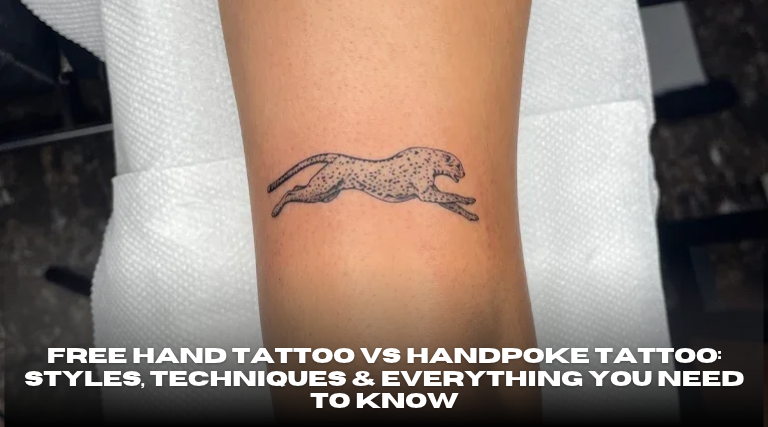
Free Hand Tattoo vs Handpoke Tattoo: Styles, Techniques & Everything You Need to Know
Free Hand Tattoo vs Handpoke Tattoo: Styles, Techniques & Everything You Need to Know
Tattoos are more than just ink on skin. They’re a form of self-expression, personal storytelling, and creative artistry. While machine tattoos remain popular, two approaches are gaining attention among tattoo enthusiasts: free hand tattoos and handpoke tattoos.
Although these terms are sometimes confused, they describe two different aspects of tattooing. Freehand tattooing focuses on how the design is created, while handpoke tattooing describes how the ink is applied.
Whether you’re considering your first tattoo or exploring a new artistic style, understanding these techniques can help you make the right choice.
What Is a Free Hand Tattoo?
A free hand tattoo, also known as a freehand tattoo, is a tattoo designed directly on the client’s skin rather than relying entirely on a pre-printed stencil.
The tattoo artist uses skin-safe markers or other suitable drawing tools to sketch the design while considering the body’s natural shape, curves, and movement.
Once the client approves the artwork, the artist tattoos the design using an appropriate technique, often a tattoo machine.
Why Choose a Free Hand Tattoo?
- Personalised artwork: Designs can be developed around your ideas and preferences.
- Natural placement: Artwork can follow the contours of your arms, shoulders, back, or legs.
- Creative flexibility: Artists can adjust shapes, proportions, and details directly on the skin.
- Unique compositions: Freehand drawing allows custom artwork tailored to individual body placement.
Popular Free Hand Tattoo Designs
1. Floral Freehand Tattoos
Flowers, vines, leaves, and botanical patterns can flow naturally around the body’s curves.
2. Abstract Freehand Tattoos
Expressive lines, geometric elements, and unconventional shapes make abstract freehand designs an interesting choice.
3. Tribal-Inspired Freehand Tattoos
Bold patterns and flowing compositions can be adapted to different placements. Cultural and traditional motifs should be approached with appropriate understanding and respect.
4. Freehand Sleeve Tattoos
Larger designs can connect existing tattoos or create a cohesive composition across the arm.
5. Ornamental Freehand Tattoos
Decorative patterns and symmetrical elements can be customised to suit the shoulders, chest, back, and other areas.
What Is a Handpoke Tattoo?
A handpoke tattoo, also called a stick-and-poke tattoo or hand-poked tattoo, is created by manually inserting tattoo ink into the skin using a sterile tattoo needle rather than an electrically powered tattoo machine.
Instead of a machine repeatedly moving the needle, the tattoo artist makes controlled punctures by hand to build the design.
Handpoke tattooing has historical roots in various traditional tattoo practices, while contemporary artists also use the technique for minimalist and custom artwork.
Why Are Handpoke Tattoos Popular?
1. Distinctive Handmade Appearance
Handpoke tattoos can have a delicate, organic appearance, particularly when used for dotwork and minimalist designs.
2. Minimalist Design Possibilities
Small symbols, simple illustrations, lettering, and dotwork patterns are commonly associated with contemporary handpoke tattooing.
3. Different Tattooing Experience
Handpoke tattooing has a different sensation and rhythm compared with machine tattooing. However, pain varies depending on placement, technique, and individual sensitivity.
4. Artistic Versatility
Experienced handpoke artists can create detailed designs, although the suitability of the technique depends on the artwork, size, and desired finish.
Free Hand Tattoo vs Handpoke Tattoo: What’s the Difference?
| Feature | Free Hand Tattoo | Handpoke Tattoo |
|---|---|---|
| Meaning | Design drawn directly on the skin | Ink applied manually with a needle |
| Main focus | Design and placement method | Tattoo application technique |
| Tattoo machine | Often used | Not used |
| Design style | Custom, flowing, abstract, ornamental | Minimalist, dotwork, illustrative, traditional |
| Time required | Depends on complexity | Can be slower for comparable designs |
| Pain | Depends on application method | Varies by individual and placement |
| Customisation | Highly adaptable | Highly adaptable |
Important: Freehand and handpoke tattoos are not mutually exclusive. An artist can draw a design freehand and then tattoo it using the handpoke technique.
Does a Free Hand Tattoo Hurt More Than a Handpoke Tattoo?
Tattoo pain is subjective, and neither approach is guaranteed to be less painful.
A freehand tattoo created with a machine generally feels similar to other machine tattoos in the same area.
Handpoke tattoos may feel like individual punctures, while machine tattoos often produce a more continuous sensation.
Factors influencing discomfort include:
- Tattoo placement and skin sensitivity
- Design size and complexity
- Session duration
- Artist technique
- Individual pain tolerance
Discuss any concerns with your tattoo artist before your appointment.
How Long Do Freehand and Handpoke Tattoos Last?
Both freehand and professionally applied handpoke tattoos are intended to be permanent.
Tattoo longevity depends on several factors, including proper ink placement, skin condition, sun exposure, healing, and long-term aftercare.
A professionally executed handpoke tattoo is not automatically temporary or less durable than a machine tattoo.
Over time, both techniques may experience fading or softening of fine details.
Tattoo Aftercare: How to Protect Your New Ink
Proper aftercare is essential for both tattoo styles.
Follow these basic tattoo aftercare practices:
- Follow the cleaning and dressing instructions provided by your tattoo artist.
- Wash the tattoo gently with clean hands and a suitable mild cleanser when instructed.
- Apply an appropriate fragrance-free moisturiser in a thin layer if recommended.
- Avoid scratching, picking, or peeling healing skin.
- Avoid swimming and soaking the tattoo until it has healed.
- Protect the healing tattoo from direct sunlight.
- Seek medical advice if you experience spreading redness, worsening pain, pus, fever, or other signs of infection.
Healing times vary, but the surface of a tattoo commonly takes around two to four weeks to recover. Deeper skin healing can take longer.
How to Choose the Right Tattoo Artist in Bangalore
Whether you’re interested in a free hand tattoo or handpoke tattoo in Bangalore, selecting the right artist matters more than following a trend.
Before booking, consider:
- Portfolio: Review healed work and examples of the specific technique you’re interested in.
- Hygiene: Confirm the use of sterile, single-use needles and appropriate infection-control procedures.
- Design consultation: Discuss your concept, placement, size, and expectations.
- Experience: Choose an artist who understands the technical requirements of your preferred style.
- Aftercare guidance: Make sure you receive clear instructions for looking after your tattoo.
Explore Custom Tattoo Art at Trippink Tattoos, Bangalore
At Trippink Tattoos, we believe meaningful tattoos begin with thoughtful conversations and creative collaboration.
Located in Koramangala, Bangalore, our studio welcomes clients looking for personalised tattoo designs, artistic guidance, and a comfortable tattooing experience.
Whether you’re inspired by expressive freehand compositions, fine-line artwork, or minimalist designs, our team can help you explore ideas that suit your personality and preferred placement.
If you’re interested specifically in handpoke tattooing, contact our studio to confirm artist availability and whether the technique is suitable for your design.
Planning your next tattoo in Bangalore?
Visit Trippink Tattoos to discuss your concept, explore custom artwork, and find a design you’ll be proud to wear.
Website: https://trippinktattoos.com/
Frequently Asked Questions About Free Hand and Handpoke Tattoos
1. What is the difference between a free hand tattoo and a handpoke tattoo?
A free hand tattoo refers to artwork drawn directly on the skin without relying entirely on a stencil. A handpoke tattoo refers to manually applying tattoo ink using a needle without a tattoo machine.
2. Are handpoke tattoos permanent?
Yes. Professionally applied handpoke tattoos are intended to be permanent, just like machine tattoos.
3. Is a handpoke tattoo less painful than a machine tattoo?
Not necessarily. Some people find handpoke tattoos more comfortable, while others experience greater discomfort. Pain depends on individual sensitivity, placement, and technique.
4. Can freehand tattoos be customised?
Yes. Freehand tattooing is particularly suited to custom compositions because the artist can adapt the design directly to the body’s shape and placement.
5. Are handpoke tattoos safe?
Handpoke tattoos can be performed safely by trained professionals following appropriate hygiene practices, including sterile, single-use needles and proper infection-control procedures. DIY tattooing carries additional risks.
6. How much does a free hand tattoo cost in Bangalore?
Pricing depends on tattoo size, complexity, placement, artist experience, and estimated session time. Contact the studio for a personalised quotation.
7. Where can I discuss a custom freehand tattoo in Bangalore?
You can contact Trippink Tattoos in Koramangala, Bangalore, to discuss custom tattoo ideas, design preferences, and available artist techniques.
8. Can a handpoke tattoo be designed freehand?
Yes. An artist can draw a design directly on the skin and then apply it manually using the handpoke technique. The two approaches can be combined.

-Author-
Ritopriyo Saha
Contemporary visual artist born in 1986 Calcutta, presently living and working in Bangalore. He is the founder of TRIPPINK, which is known as a premium tattoo, art & music studio in Bangalore where he practices and teaches tattoo, painting and sculpture. In his personal time he writes prose and poetry, composes music on the piano, and makes independent short films receiving critical acclaim in a few film festivals across the world. He is known for organizing intimate gatherings for live music, performance art, dance, poetry and art related workshops, a breakthrough initiative to encourage young and upcoming independent talents from all fields of art.

